United Nations experts and press freedom advocates warned that exiled journalists continue to be targeted through Interpol mechanisms, digital surveillance and political pressure. They called on European countries to strengthen protections for opposition journalists living in exile.
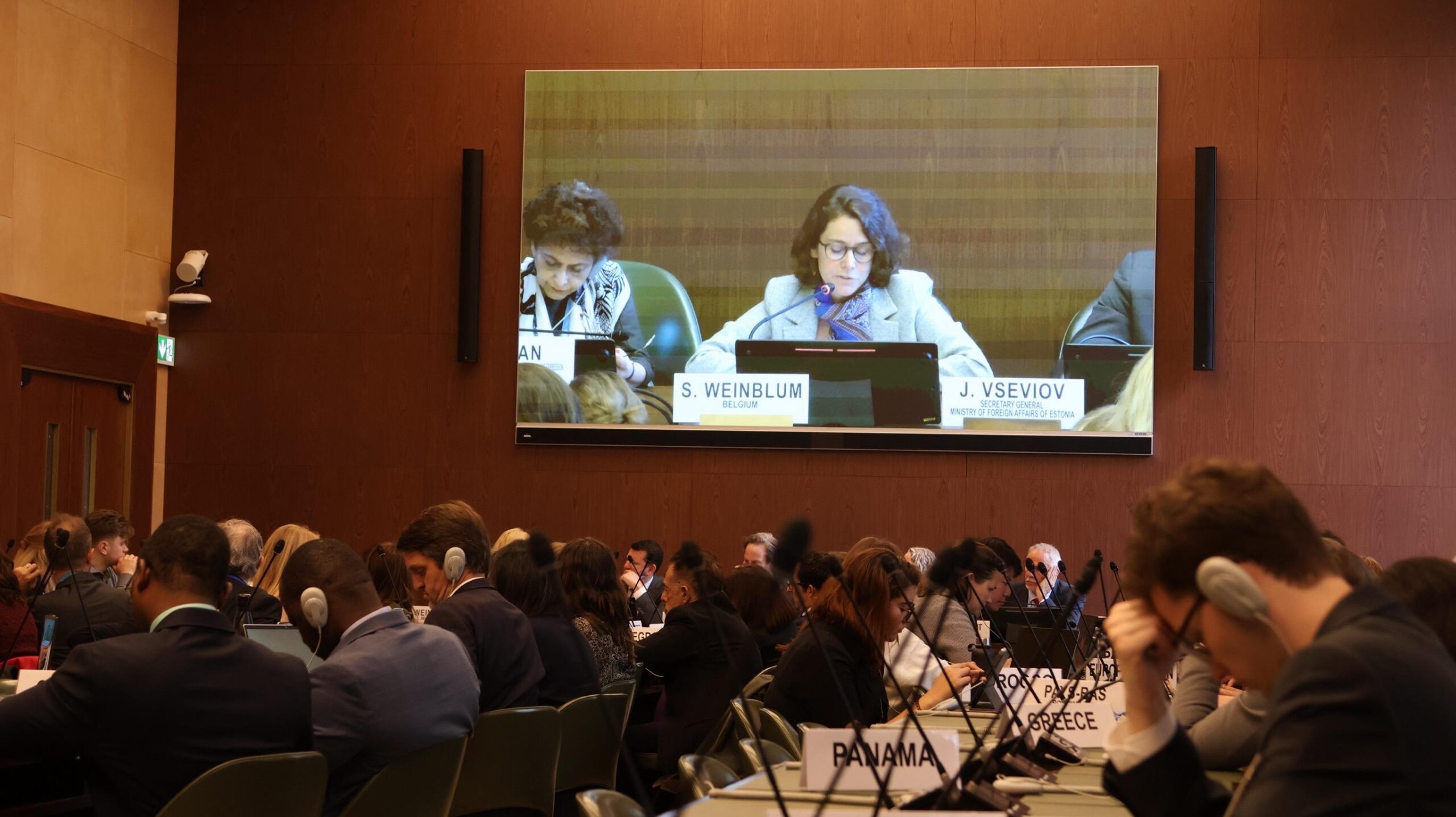
At a panel held at the United Nations as part of World Press Freedom Day, titled “Protecting Journalists in Exile and International Repression” participants discussed the risks faced by journalists forced to flee their home countries. Human rights experts and press freedom representatives emphasized that exile is no longer a safe haven, noting that journalists continue to be targeted through Interpol mechanisms, digital surveillance and political pressure. Participants stressed that the issue has become a global human rights and security concern. The panel was followed on behalf of the International Journalists Association (IJA) by Turkish Minute journalist Orhan Sait Berber.
Turkey highlighted as a key example
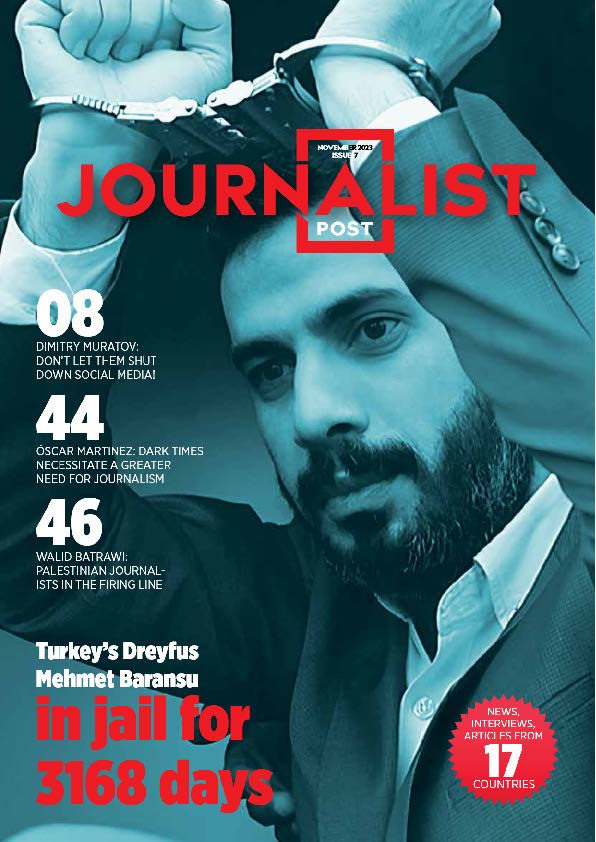
Turkey emerged as one of the most striking examples in discussions about transnational repression targeting journalists in exile.
Experts said that some authoritarian states, including Turkey, have extended their repression of opposition journalists beyond their borders, and that journalists continue to be targeted even after obtaining asylum status.
The most repeated message throughout the panel was clear: “Exile is no longer safe.”
UN Special Rapporteur calls on Europe
Irene Khan, the United Nations Special Rapporteur on Freedom of Expression, called on European countries to strengthen protections for exiled journalists, particularly Turkish journalists.
“European countries must not allow political or commercial relations to take precedence over human rights,” she said.
“In some cases, the Turkish government has requested the return of journalists living in European countries or attempted to harass them,” Khan said, stressing that the status of journalists granted asylum must be fully protected.
Khan also emphasized that Europe’s political and commercial relations with Turkey should not override its human rights obligations. She warned that transnational repression threatens not only press freedom but also the international legal order.
Criticism of the Interpol system
The misuse of Interpol mechanisms for political purposes was another major topic of discussion.
Fiona O’Brien of the Committee to Protect Journalists (CPJ) said that many journalists are not even aware that Red Notices have been issued against them.
“These kinds of practices affect people’s freedom of movement, professional lives, and family life,” O’Brien said, adding that politically motivated requests cause serious harm.
Can Yeğinsu, a member of the High Level Panel of Legal Experts on Media Freedom, described the core problem within Interpol as a lack of transparency.
Emily Foale of the International Bar Association said that the system lacks sufficient safeguards to protect journalists.
A representative from Canada also warned that the political misuse of Interpol mechanisms creates a serious risk of deportation for journalists and dissidents.
Peggy Hicks, Director of Thematic Engagement, Special Procedures and Right to Development at the Office of the United Nations High Commissioner for Human Rights, said that Interpol Red Notices and international police cooperation mechanisms can be abused “under the appearance of legitimate law enforcement.”
The principle of non-refoulement
Panelists underlined the importance of protecting the principle of non-refoulement, which prohibits the forced return of individuals to countries where they face political persecution or torture. Experts said that politically motivated extradition requests must be assessed independently.
Digital surveillance and new tools of repression
Speakers noted that exiled journalists face not only physical threats but also digital ones. The panel included extensive discussion of the Pegasus spyware and digital surveillance practices. Participants said journalists’ phones have effectively become “24 hour surveillance devices.”
Joanna Szymańska of ARTICLE 19 said that social media platforms can be used to silence journalists through coordinated complaint campaigns.
Szymanska said exiled journalists are often labeled as “agents” or “terrorists” with the aim of severing their ties to the communities they seek to inform.
Emily Foale added that transnational repression is evolving into an increasingly sophisticated system of digital and legal pressure.
Foale said technology companies and social media platforms are failing to adequately protect journalists from online threats and organized harassment campaigns.
UN Rapporteur Irene Khan also stressed that digital platforms must assume greater responsibility to ensure journalists can work safely.
The global dimension of transnational repression
Using examples from Belarus, Russia and Turkey, participants said transnational repression is becoming an increasingly global phenomenon.
Belarusian exiled journalist Yauhen Merkis described how journalists are labeled “extremists,” have their passports revoked, and see their families subjected to pressure.
The murder of Jamal Khashoggi was cited as one of the most striking examples of transnational repression.
“Think of Khashoggi. Unfortunately, he is one of the best known exiled journalists who lost his life because of transnational repression,” Irene Khan said, noting that authoritarian governments are now capable of targeting journalists beyond their own borders.
“Exile must not become a new tool of repression”
Opening the event, Jonatan Vseviov, Secretary General of the Ministry of Foreign Affairs of Estonia, said that press freedom and security can no longer be viewed separately.
“Peace is built not on silence, but on truth, accountability, and trust,” Vseviov said, adding that authoritarian states continue to target journalists even in the countries where they seek refuge.
Sylvie Coudray of UNESCO said that 72 percent of the world’s population lives under authoritarian regimes and that press freedom has declined significantly in recent years.
A representative from the United Kingdom announced that the Media Freedom Coalition would take a more active role in addressing transnational repression, stressing that governments, international organizations, and civil society must work together to protect exiled journalists.
The panel’s moderator, Renaud de Villaines, said exiled journalists often become the human face of cross-border human rights violations and emphasized the importance of solidarity with reporters forced to flee authoritarian governments.
In the panel’s concluding assessment, participants reiterated that governments, international organizations, and civil society must act together to protect exiled journalists.
The shared message from all participants was unequivocal:
“Exile must not become a new tool of repression.”