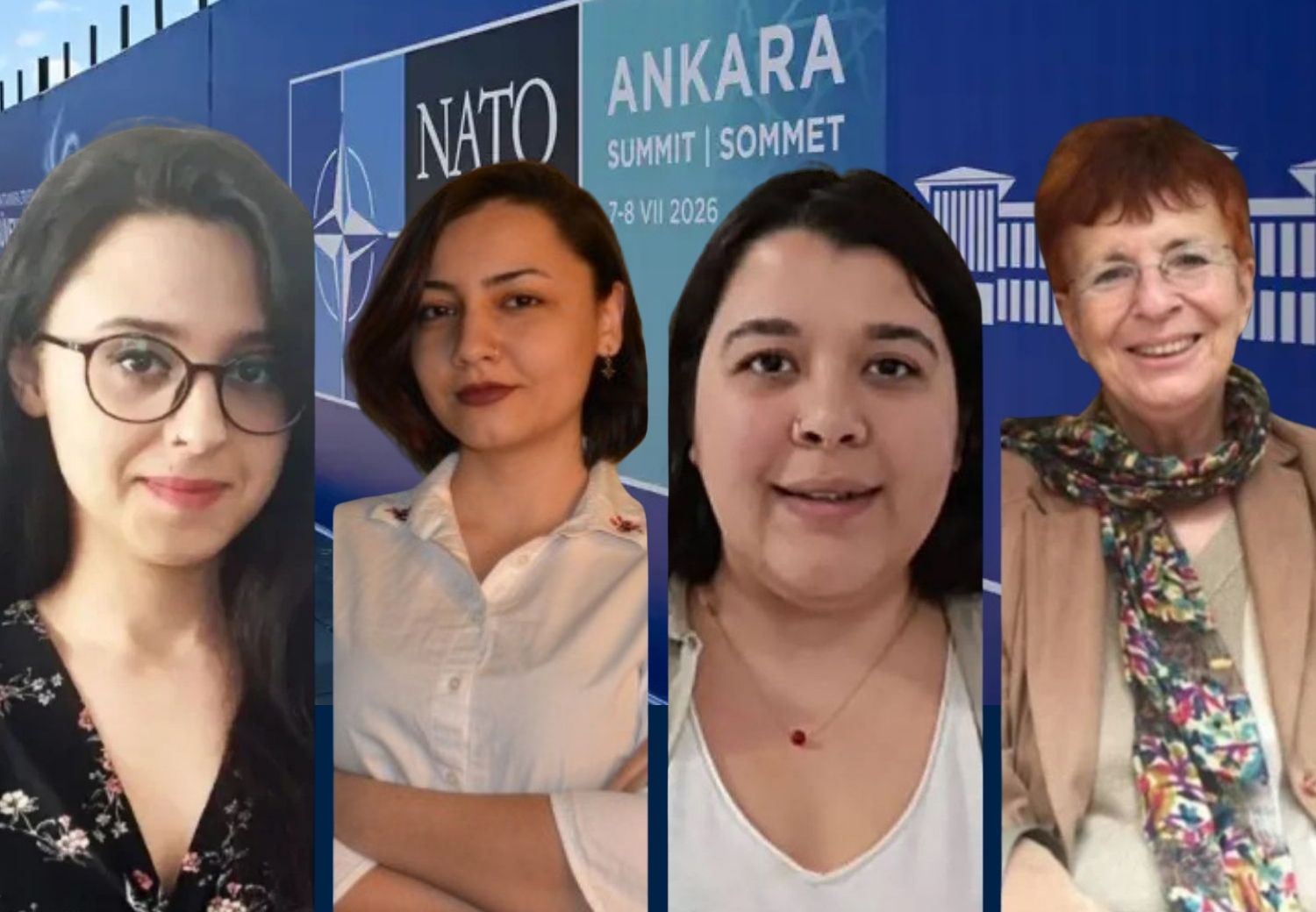
As detentions targeting journalists, academics and lawyers continue ahead of the NATO Summit to be held in Ankara on July 7-8, Turkey’s broadcasting watchdog has issued a notable warning to media outlets. The Radio and Television Supreme Council (RTÜK) reminded broadcasters that it was “monitoring your broadcasts” ahead of the summit, which begins Tuesday, and urged them to ensure their coverage was “consistent with the perspective of national security.” Press freedom organizations, meanwhile, condemned the detentions.
Detentions ahead of NATO summit
Operations launched in Ankara ahead of the NATO Summit have spread to several provinces across Turkey. Those detained include journalists, academics, lawyers and members of various political groups.
According to a statement by the Progressive Lawyers Association (ÇHD), lawyer Ezgi Önalan was detained. Academic and author Assoc. Prof. Sibel Özbudun and academic Temel Demirer were also among those taken into custody.
Police raids target journalists
Journalists were also targeted in the operations. Buse Söğütlü, foreign news editor at T24, and Ceren Erdoğdu, an editor at Odatv, were detained. Söğütlü’s lawyer, Erman Öztürk, said his client had been barred from meeting with a lawyer for 24 hours and that authorities had not informed them of the reason for her detention.
Press organizations condemn detentions
Press organizations condemned the detentions. The Turkish Journalists Association (TGC) described them as a violation of press and freedom of expression and called for the immediate release of the two journalists.
The Journalists’ Union of Turkey (DİSK Basın-İş) said in a statement: “We condemn the detention of journalists during the operations carried out ahead of the NATO Summit. These practices constitute a clear intervention against press freedom and freedom of expression.”
Erol Önderoğlu, Turkey representative of Reporters Without Borders (RSF), said: “The indiscriminate, arbitrary and random operations carried out ahead of the NATO Summit clearly threaten the safety and reputation of journalists.”
RTÜK warns media outlets
As the detentions continued, RTÜK also issued a statement addressed to broadcasters. The regulator said the NATO Summit was an important event for Turkey and urged media organizations to observe the “public interest” and a “national security perspective” in their news coverage and discussion programs.
RTÜK added that broadcasts were being closely monitored by its Monitoring and Evaluation experts and reminded broadcasters that “all broadcasts are being carefully monitored.”
Opposition media denied accreditation
As previously reported, accreditation applications submitted by numerous opposition journalists and media outlets seeking to cover the NATO Summit on-site were rejected. Following criticism, NATO spokesperson Allison Hart said that for events organized outside NATO headquarters, accreditation decisions are based on the assessment of the host country.
The detention of hundreds of people ahead of the summit, restrictions on media accreditation and RTÜK’s statement that it is monitoring broadcasts have once again fueled concerns over freedom of expression and press freedom in Turkey.