


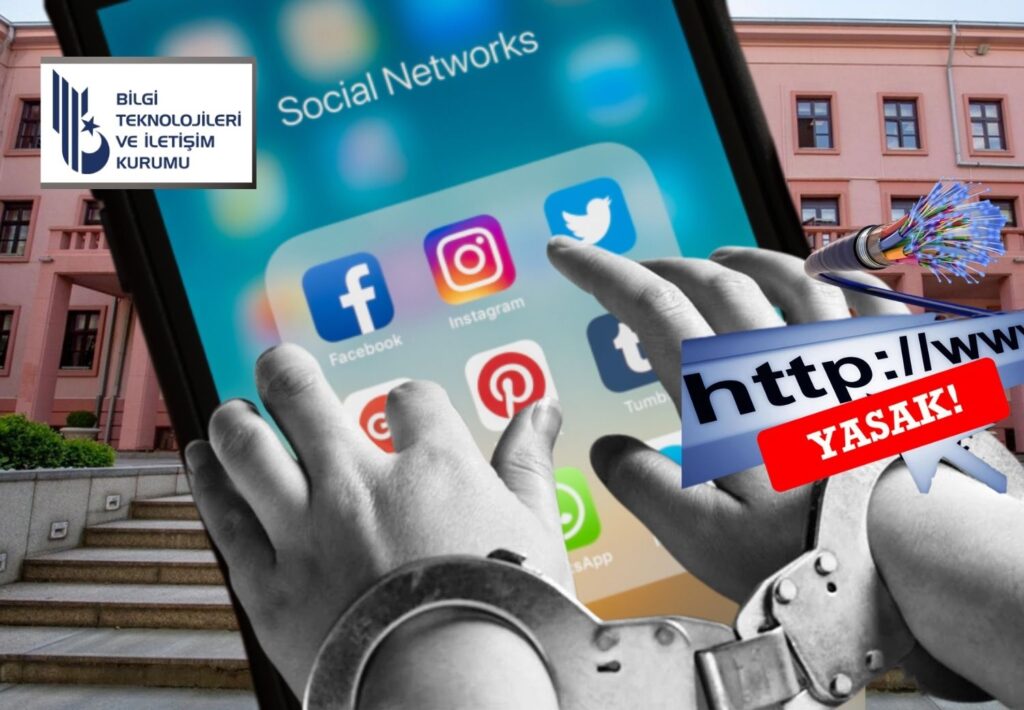
Turkish authorities have imposed a sweeping access ban targeting a total of 146 social media accounts belonging to opposition journalists and human rights organizations. According to a court order sent to organizations including the International Journalists Association (IJA), the ban was approved by the Ankara 4th Criminal Court of Peace.
Turkey blocks access to 146 social media accounts belonging to opposition journalists and human rights organizations
One of the organizations affected by the ban is the Stockholm Center for Freedom (SCF), a Sweden-based nonprofit that monitors and reports on developments related to human rights, press freedom and democracy in Turkey. SCF confirmed that users connecting from Turkey can no longer access its X account.
According to the court ruling, the Ankara 4th Criminal Court of Peace approved the access ban on June 26. The decision followed a temporary restriction imposed a day earlier by the Information and Communication Technologies Authority (BTK) at the request of the General Directorate of Security.
No justification provided
The four-page court ruling did not identify any specific social media posts or provide an individual justification for blocking the accounts. Instead, the restrictions were collectively approved under Article 8/A of Turkey’s internet law on the grounds of protecting national security and public order.
Other accounts named in the ruling include those of journalists Adem Yavuz Arslan, Sevinç Özarslan, Said Sefa, Ahmet Dastan and Turhan Bozkurt. The International Journalists Association (IJA) and the Journalists and Writers Foundation (JWF) were also among the organizations affected by the ban.
The order also targeted the KHK TV YouTube channel, which features the stories of people dismissed under emergency decree laws (KHKs), as well as the Brussels-based Human Rights Center, Cross Border Jurists and the European Justice Initiative.
Ban imposed ahead of July 15 anniversary
The decision was issued ahead of the 10th anniversary of July 15 in Turkey. Following what the article describes as the “controlled coup attempt,” 179 media outlets and publishing organizations were shut down under emergency decrees, and numerous journalists were imprisoned. According to the Committee to Protect Journalists (CPJ), Turkey was at one point the world’s leading jailer of journalists.
The latest decision is seen as part of a broader escalation in online censorship. Since the beginning of 2026, Turkish authorities have issued numerous access-blocking orders targeting online content and social media accounts belonging to Kurdish media outlets and left-wing groups, as well as LGBTQ+ rights advocates and individuals and organizations affiliated with the Gülen movement.
Turkey has long faced criticism from international press freedom and human rights organizations over restrictions on freedom of expression and pressure on independent journalism. Authorities frequently seek court orders to block online content and social media accounts, particularly when posts concern senior government officials or politically sensitive issues.
In its Freedom on the Net 2025 report, the US-based democracy watchdog Freedom House ranked Turkey among the five countries that have experienced the greatest long-term decline in internet freedom. Giving Turkey a score of 31 out of 100, the organization said censorship has become increasingly widespread and digital surveillance has intensified over the past 15 years. With that score, Turkey ranked in the lowest category among the 72 countries evaluated.