


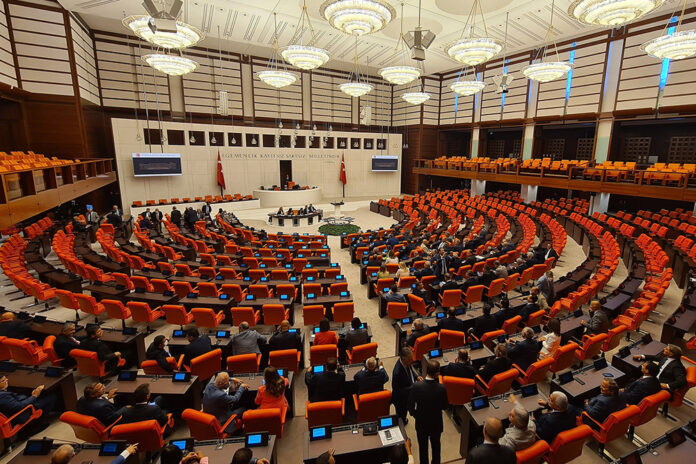
Under a new regulation adopted by the General Assembly of the Grand National Assembly of Turkey, children under the age of 15 will no longer be allowed access to social media services, while new obligations have also been introduced for gaming platforms.
The Turkish parliament approved a legislative package amending the Social Services Law and several other laws. The regulation brings together a wide range of changes under a single framework, covering areas such as labor life, the child protection system, social assistance, digital platforms, and public employment.
Restrictions on social media
One of the most significant aspects of the law concerns children’s access to digital environments. According to the regulation, social network providers will not be permitted to offer services to children under the age of 15. For those aged 15 and above, platforms will be required to provide segregated services and parental control tools. Companies will be obligated to take all necessary measures, including age verification systems, which will now be mandatory.
For social media platforms with more than 10 million daily users in Turkey, new deadlines and sanctions have been introduced regarding the enforcement of content removal and access-blocking decisions. Failure to comply may result in advertising bans, financial penalties, and bandwidth restrictions.
Gaming platforms also included
Gaming platforms are also covered under the new law. Foreign based gaming platforms with more than 100,000 daily users in Turkey will be required to appoint a local representative. Age criteria will be applied to unrated games, parental control tools must be provided, and companies will be required to share information and documents in line with requests from the Information and Communication Technologies Authority. Non-compliance may lead to fines and bandwidth reduction penalties.
These provisions concerning social media and gaming platforms will come into force six months after the law is officially published.
The law also introduces the installation of software supported camera systems connected to a central monitoring system in residential social service institutions. Personal data obtained from these systems will be deleted after two years unless it is subject to judicial or administrative investigation. The data cannot be shared with any individual or institution without a court order, however, it may be anonymized and used for planning and policy development purposes.