


The second event of the Frankfurt Talks – a cooperation between Haus am Dom and the International Journalists Association (IJA) – was held on the occasion of the 35th anniversary of German reunification. It examined the state of social cohesion in Germany today. The discussion brought together perspectives on East/West biographies, migration and diversity, the role of the media, and the rise of populism.
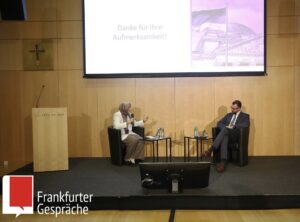

Yasemin Aydın (Director of International Relations & Public Engagement, IJA) opened the evening by outlining the purpose of the series: to amplify voices that are often overlooked and to provide space for debate across familiar boundaries. She underlined that unity is not only a historic milestone but a continuous democratic task. Current challenges—migration, diversity, populism—directly affect the foundations of democratic life: language, media, and trust in institutions.
In his welcome remarks, Prof. Dr. Joachim Valentin (Director, Haus am Dom) recalled Frankfurt’s role in past reunification commemorations and highlighted the long-standing intercultural focus of the House. His key message, “Without discourse, no unity; without diversity, no union,” framed the evening.
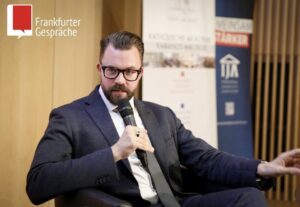

Prof. Dr. Marcel Lewandowsky: People do not vote for the AfD out of protest, but out of conviction,
Prof. Dr. Marcel Lewandowsky (since October 1, 2025 Professor of Government and Policy Research at Martin Luther University Halle-Wittenberg) stressed that his contribution aimed at empirical analysis rather than commemoration. His central thesis: Germany’s democratic institutions are stable, but the decisive developments take place in public attitudes and forms of affective polarization.
Lewandowsky distinguished between:
Dissatisfaction, he noted, is directed less at democratic ideals or institutions, but at perceived shortcomings in political performance. Concern arises when polarization shifts from positions to people themselves. He observed strong mutual antagonism in particular between AfD and Green supporters. “People do not vote for the AfD out of protest, but out of conviction,” he emphasized. Populist parties, in his view, redefine democracy by claiming to represent the “true will of the people” against elites, which is an illiberal approach.
Lewandowsky also warned against mainstream parties adopting right-wing frames, particularly in migration policy. Empirical data, he argued, show that this strengthens rather than weakens populist actors. His recommendation: focus on areas where established parties have credibility—such as social justice, climate, and public services—rather than following the agenda of the far right.
Media, Diversity and the Integration Paradox
In the subsequent dialogue, the role of media responsibility was discussed. Aydın raised the issue of how uncritical interviews risk normalizing extremist positions. Lewandowsky called for clearer classification of actors rather than neutral treatment, while noting the dilemma for journalists between denying a platform or providing one with adequate context and fact-checking.
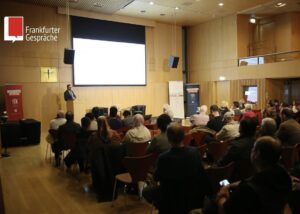

The recently published Diversity Barometer 2025 was also addressed. It shows declining acceptance, particularly with respect to ethnic and religious diversity. Aydın referred to the integration paradox: greater visibility and participation often generate more conflict, not as failure but as part of negotiation in a plural democracy. Problems arise, however, when disadvantaged groups are set against each other—such as East Germans and people with migration backgrounds—creating additional openings for populist mobilization.
Questions from the audience highlighted the central tensions of the topic. On the East-West divide, Lewandowsky referred to the contact hypothesis: rejection is often based not on daily interaction but on media images and stereotypes.
Aydın pointed to another phenomenon: within migrant communities, some support the AfD, often on the grounds that they have “integrated,” while newcomers are seen as responsible for difficulties. Lewandowsky noted that this illustrates how the “us versus them” dynamic can also appear within minority groups.
One young participant with a refugee background asked what individuals can do. Lewandowsky advised visibility, civic engagement, and party membership. Despite their shortcomings, he argued, political parties remain the central infrastructure of representative democracy. Yet they are dominated by older, male, and academic profiles—diversifying them is part of strengthening democratic structures. Aydın added that diversity in politics should be seen not only as representation, but as a condition for cohesion.
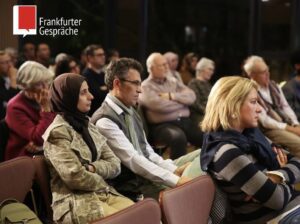
Looking Ahead

In response to a final question about the next 10–20 years, Lewandowsky highlighted the social dimension as decisive. Rising economic inequality, he argued, erodes trust, fuels dissatisfaction, and intensifies polarizing electoral behavior. Democracy depends on social security and fair opportunities. In the anniversary year of reunification, this was presented as a key message: without social justice, cohesion remains fragile; with it, democracy can regain trust and resilience.