


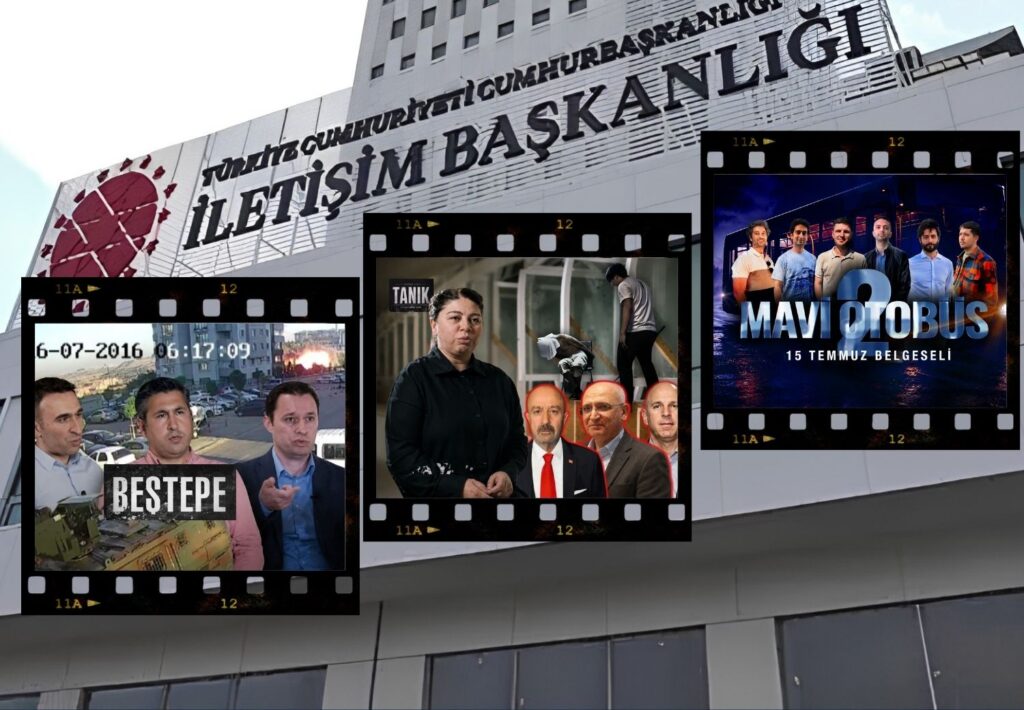
The Turkish government has swiftly blocked access to thousands of social media accounts, including those of journalists and documentary producers, that shared eyewitness accounts, documents and court records related to the events of July 15, preventing the dissemination of information challenging the official narrative.
Acting as what critics describe as a propaganda arm of the ruling Justice and Development Party (AKP), Presidential Communications Director Burhanettin Duran announced that access had been blocked to 2,702 social media accounts allegedly linked to the Gülen movement over the past month. Duran’s statement highlighted the government’s intensified digital censorship and monitoring efforts ahead of the 10th anniversary of the alleged coup attempt on July 15.
The Presidency’s Directorate of Communications, the General Directorate of Security’s Cybercrime Department, public prosecutors and the Information and Communication Technologies Authority (BTK) jointly carried out the operation that resulted in thousands of accounts being blocked. Duran also announced that legal and administrative action had been initiated against an additional 1,652 accounts accused of spreading “terrorist propaganda,” “disinformation” and conducting “psychological operations.”
Access bans ahead of the July 15 anniversary
The timing of the announcement, just before the 10th anniversary of July 15, drew attention. While the government has for years maintained its official narrative about the events of that night, social media accounts and media outlets questioning unresolved aspects of the incident have frequently faced access restrictions. Critics say the government has further intensified its censorship and oversight of digital platforms.
Opposition circles argue that the access-blocking decisions target not only groups the government labels as terrorists but also alternative interpretations and analyses of the events of July 15. Digital rights advocates say the mass blocking of thousands of accounts raises serious concerns about freedom of expression.
Documentaries Beştepe, Witness and Blue Bus censored
Access was also blocked to the documentaries Beştepe, WITNESS / After That Night (TANIK / O Geceden Sonra) and Blue Bus 2 (Mavi Otobüs 2), which examine unanswered questions surrounding July 15 through court records, video footage and eyewitness testimony rather than the state’s official narrative.
“357 videos banned, they aren’t even reviewing the content”
Journalist Adem Yavuz Arslan was among those who criticized the rapid censorship. He announced that 357 videos on his YouTube channel had been blocked under separate court orders.
In a statement on social media, Arslan said it would have been impossible for authorities to review nearly 400 hours of content in such a short period, arguing that the decisions were intended to censor rather than evaluate the material.
He said the fact that hundreds of rulings were issued on the same day demonstrated that the videos had not been examined individually, describing the practice as alarming for press freedom and freedom of expression. Arslan also criticized the blocking of content produced over many years, adding that accounts publishing material about the events of July 15 have become increasingly targeted in recent years.
As court-ordered access bans on online news reports, videos and social media posts have increased in recent years, press freedom and human rights organizations have continued to warn about their negative impact on freedom of expression.