


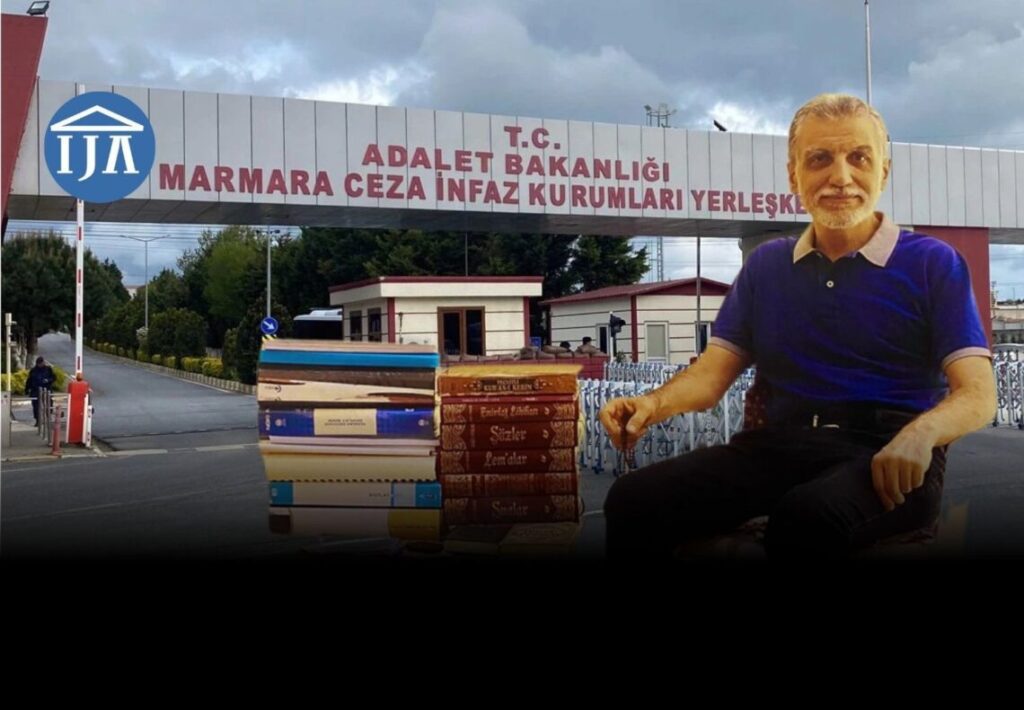
Journalist Hidayet Karaca was detained on December 14, 2014, over allegations related to the script of a television series and is now entering his twelfth year of imprisonment in a cell at Silivri Prison.
The European Court of Human Rights (ECtHR) ruled that Karaca’s detention prior to July 15 violated his rights, declared his prolonged detention unlawful, and ordered Turkey to pay €18,000 in compensation. Although Turkey’s Court of Cassation overturned his life sentence, the local court resisted the ruling and again imposed aggravated life imprisonment.
The prolonged violations experienced by Karaca were detailed by journalist Adem Yavuz Arslan on TR724.
A case of shame: Hidayet Karaca enters his 12th year
Today marks the beginning of the twelfth year. Eleven years have passed.
Hidayet Karaca, CEO of the Samanyolu Media Group, journalist and colleague, has now spent 132 months, 574 weeks, and 4,018 days behind bars.
Poet Necip Fazıl Kısakürek once wrote: “In prison, a minute is no different from a month.”
By calculation, Karaca has been deprived of his freedom for 96,432 hours, or 5,785,920 minutes.
Karaca was neither the scriptwriter nor the producer of the TV series cited in the indictment. He was merely a media executive. That alone proved sufficient.
The phone recordings used as evidence were illegal, yet decisive.
Violations from the very first day
During his initial detention at Istanbul’s Çağlayan Courthouse, Karaca was subjected to inhumane conditions. Despite illness, he was denied water, sleep, food, and medication. The legal detention period was exceeded.
Prosecutors asked political questions rather than legal ones, including why his media outlets had criticized the government.
The decision was political, not judicial.
Indictment collapses – sentence remains
The indictment unraveled during trial. Evidence was lacking, logic absent.
Nonetheless, Karaca was convicted based on statements by a secret witness later convicted of fraud.
Despite the Court of Cassation ruling that no such criminal organization existed, Karaca was not released.
He spent most of his imprisonment in solitary confinement in a cell of approximately ten square meters.
Physical and psychological abuse
Karaca was transported in handcuffs, fell during transfers, and suffered injuries.
Even attending his father’s funeral was turned into a punitive ordeal.
Despite over seven years in solitary confinement, authorities treated him as a fugitive, seized his pension unlawfully, froze assets, and imposed excessive financial penalties.
A case written into a regime’s record
This case is symbolic.
A system that derives eleven years of solitary confinement from a television script will not be remembered for its verdicts, but for its human rights record.