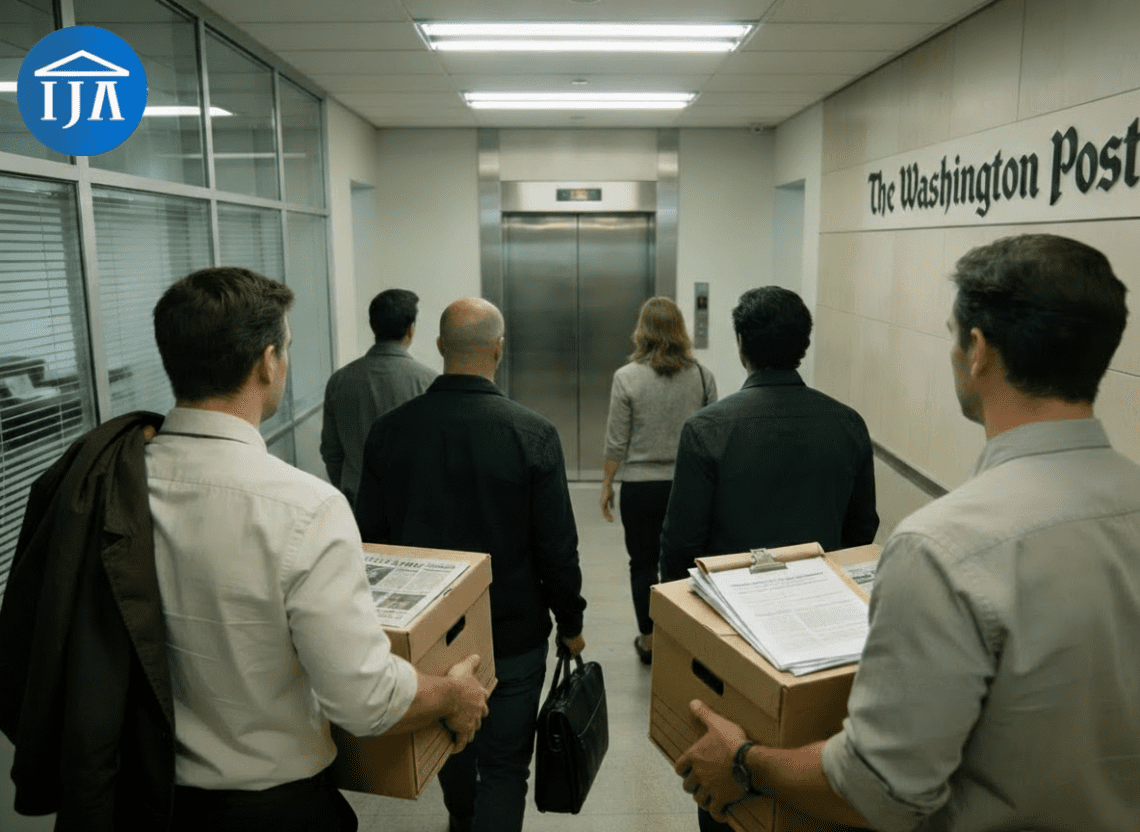
The decision by The Washington Post to lay off a large number of employees for economic reasons has triggered growing backlash. The historic US newspaper plans to cut roughly one-third of its workforce.
The sports and international news departments are set to be significantly reduced, with hundreds of journalists expected to lose their jobs.
Chief Executive Officer Matt Murray defended the move, arguing that it is necessary to place the newspaper on firmer ground amid technological change and shifting audience habits.
No Correspondents Left in the Middle East and Turkey
Claire Parker, the paper’s Cairo bureau chief, announced on social media that all Middle East correspondents and editors — including herself — had been dismissed. “It’s hard to understand the logic,” she wrote.
The layoffs also include the newspaper’s Turkey-based reporters.
A Turning Point for Journalism
The cuts are widely viewed as a critical moment for The Washington Post, a publication that made journalism history with its reporting on the Watergate scandal.
The layoffs have reignited debate in the United States about the relationship between media and capital. Many commentators argue that the situation demonstrates why media organizations should not be left at the mercy of billionaire owners.
As advertising revenues have fragmented in the internet era, journalism has become significantly more expensive and challenging. Experts suggest that the future of the industry will depend less on wealthy proprietors and more on self-sustaining, resilient business models.