Journalists Alaeddin Kaya (75), Hidayet Karaca (61), former AKP lawmaker İlhan İşbilen (80), and Kazım Avcı (75) have once again been sentenced to aggravated life imprisonment – despite a ruling by the Court of Cassation overturning their convictions. The Ankara 4th High Criminal Court ignored the top court’s decision and insisted on the charge of “violating the Constitution.” The contradiction highlights how independence of the judiciary and the right to a fair trial are severely restricted in Turkey.
Journalist Sevinç Özarslan of TR724 detailed the decade-long rights violations against Kaya, Karaca, İşbilen, and Avcı. Her report was headlined: “Disgrace: Has the state left 75-year-old Alaeddin Kaya to die? With a wheelchair and neck brace, he struggles for justice!”
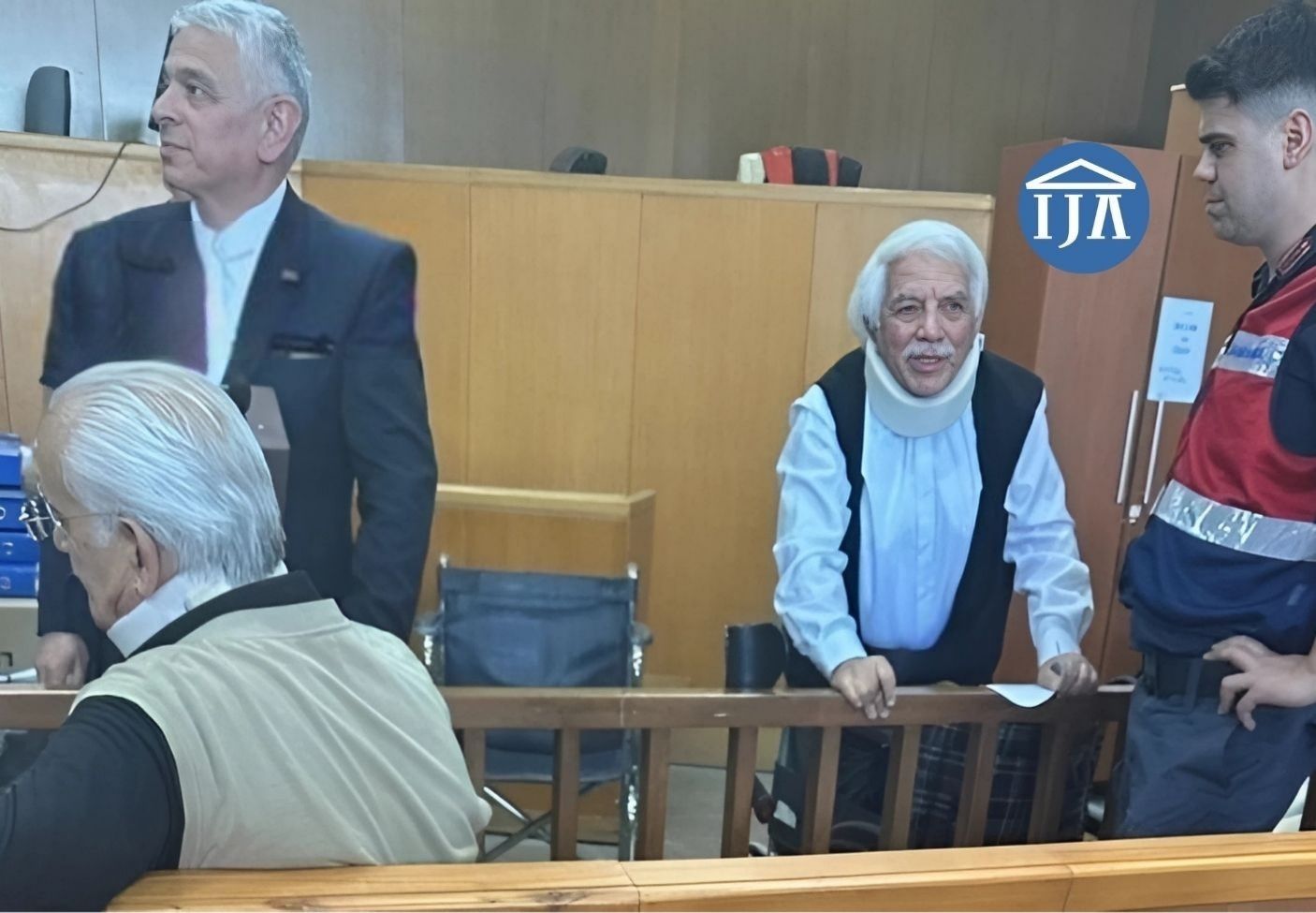
The above photo was taken on June 18, 2025, inside the Ankara 4th High Criminal Court. It has become a historic image of the condition of sick prisoners in Turkey.
The man wearing a neck brace is Alaeddin Kaya, founder of the still-broadcasting Channel 24. His wheelchair, without which he cannot move, is also visible. Sitting at the front with his back to the camera is former AKP MP İlhan İşbilen – also wearing a neck brace. Kaya is 75, İşbilen 80. Both have been imprisoned for ten years and suffer from serious illnesses. Kazım Avcı, who is officially 78 percent disabled, is also in deteriorating health.
The court once again handed down life sentences for “attempting to overthrow the Constitution.” The Court of Cassation had already overturned these verdicts twice – first in 2018 and again on April 9, 2025. In its reasoning, the court said: “There is no legally admissible evidence that they were involved in planning or executing a coup. A conviction for violating the Constitution is therefore unlawful.”
Nevertheless, the lower court launched a new trial. Kaya was able to attend the first hearing on June 18, but not the follow-up sessions in July, as his request to be transported by ambulance was denied. İşbilen collapsed in court on July 9 and was rushed to hospital. On July 11, 2025, the court once again sentenced the men to life imprisonment.
Legal experts stress that it is unprecedented for rulings overturned twice by the Court of Cassation to be reinstated by the same court. They also note that eight years of pretrial detention exceeds the legal limit and violates European Court of Human Rights rulings.
Serious illness and risk of death
Kaya has been held in solitary confinement at Sincan F-Type Prison in Ankara since his arrest in August 2016. He suffers from diabetes, heart arrhythmia, hypertension, kidney failure, and COPD. After a fall in prison, he sustained severe cervical spine damage that left him reliant on a wheelchair. Doctors have said he urgently needs two brain surgeries, but hospitals so far refuse to perform them.
At the hearing, he told the court:
“My health is very poor. I fell in prison four years ago. Since then, I’ve had severe problems. I no longer have strength. I cannot stand up. Fluid is accumulating in my brain, causing constant pain.”
Later, he asked permission to continue his defense sitting down, as he could no longer remain standing:
“I am utterly exhausted. My condition is deteriorating. I cannot even sit for long periods; I constantly need to rest.”
In his final statement, he again emphasized his dire condition:
“For four years, doctors have refused to perform the brain surgery I need. I desperately need help, but no one wants to take responsibility. How am I supposed to undergo this operation?”
Kaya also pointed out that even simple medical requests, such as transportation by ambulance, were ignored:
“The Justice Minister said prisoners are entrusted to the state. Please fulfill this responsibility.”
An uncertain future
If the Court of Cassation upholds the verdict this time, it remains unclear whether Kaya and the others will ever leave prison alive. Already, many ill prisoners in Turkey die because courts systematically ignore their health problems.
The accusations
Kaya was mainly charged because he was one of the former license holders of the now-shuttered Zaman daily and was alleged to have ties to the Gülen movement. He was also accused of attending a meeting with Fethullah Gülen at the Vatican and of links to the coup attempt.
In reality, Kaya was the founder of Channel 24. Why this fact was omitted from the indictment remains unanswered. His longtime associate Fehmi Koru testified in court. Many questions – including whether political orders influenced the case – were left unresolved.
Observers say Kaya’s case symbolizes the state of Turkey’s judiciary: elderly and gravely ill people sentenced to life without evidence – left to die slowly behind bars.